






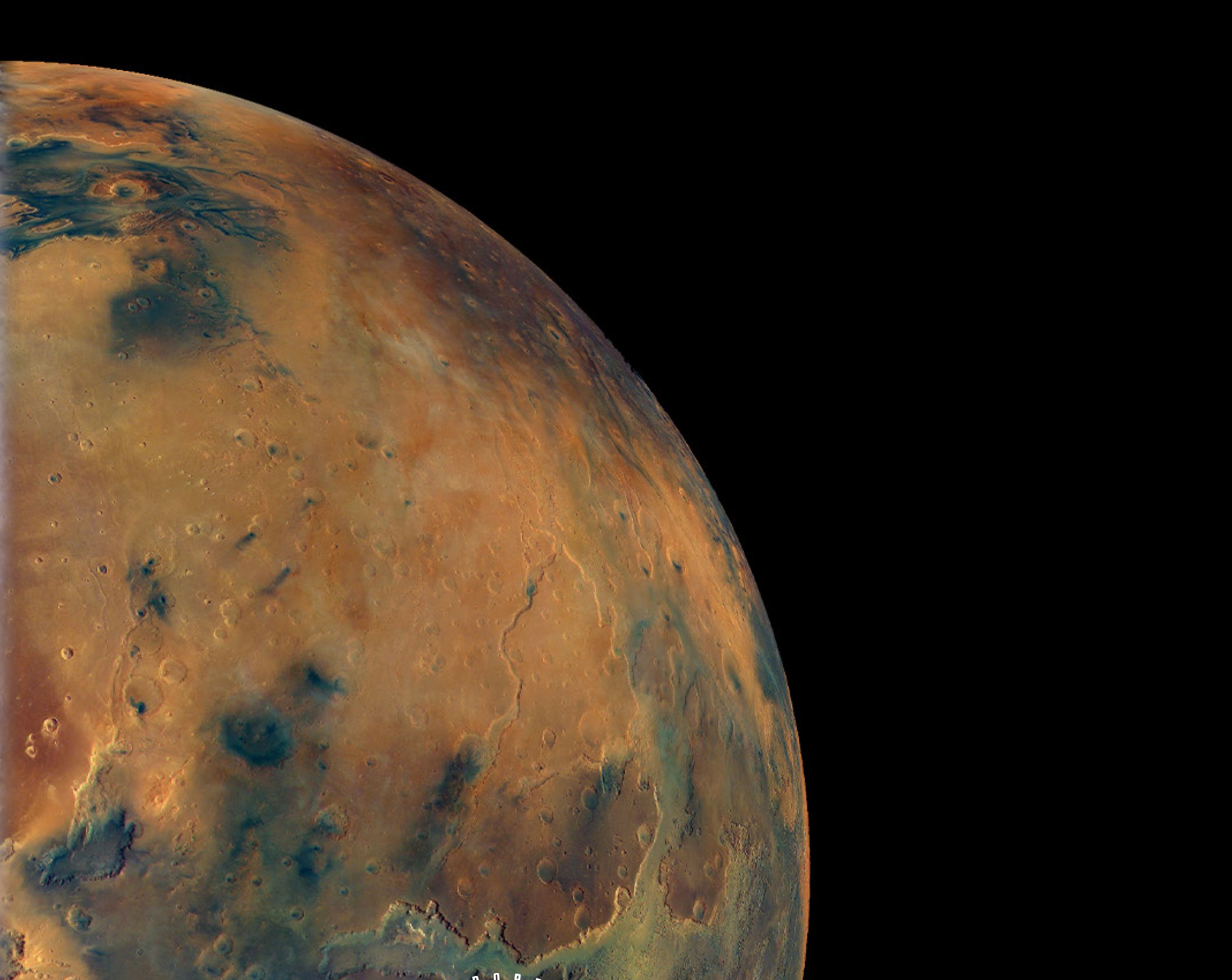
The European Space Sciences Committee (ESCC) has prepared this brochure to mark the ESA ministerial year, showcasing the remarkable achievements of human and robotic space exploration and emphasising their far-reaching scientific and societal impact.

Recent advances in neuroscience reveal that the human brain does not merely passively observe the world – it actively probes its environment through movement, experimentation, and an innate drive to explore. Curiosity is not optional; it is a biological imperative, hardwired into our neural circuitry to ensure survival, innovation, and progress. From our earliest ancestors venturing beyond local horizons to the pioneers of science and industry, exploration defines what it means to be human.
Today, having mapped and mastered Earth’s frontiers, humanity’s next inevitable step is the robotic and human exploration of nearby space. This is not a speculative endeavour but a necessary evolution – one that promises transformative returns. By expanding into the solar system, we unlock unprecedented scientific discoveries, safeguard our future through access to strategic off-planet resources, and catalyse a new economic paradigm with industries ranging from satellite servicing and orbital infrastructure development to asteroid mining.
This brochure showcases Europe’s groundbreaking scientific discoveries enabled by its participation in the International Space Station and its pioneering work in astrobiology and the exploration of the Moon and Mars. Compelling as they are, they represent only a foretaste of the advances to come.
Space is the ultimate laboratory. Its microgravity, extreme temperatures, and radiation exposure enable breakthroughs unobtainable on Earth – from revolutionary pharmaceuticals and materials to quantum physics and AI driven robotics. There is no analogue. The very act of overcoming these challenges accelerates technologies with immediate terrestrial applications: miniaturised medical devices, disaster-resistant infrastructure, and sustainable closed-loop life-support systems.
But leadership in space is not guaranteed. As China and the U.S. race to establish lunar bases and footprints on Mars, secure resource rights, and dominate orbital infrastructure, Europe faces a stark choice: invest now or cede strategic autonomy. ESA’s Human and Robotic Exploration programme is not just a scientific endeavour – it is a gateway to sovereign technology, highvalue jobs, and a voice in shaping humanity’s future beyond Earth.
The question is no longer whether we can afford to act, but whether we can afford inaction. History rewards pioneers. By uniting behind ESA’s programme at CM25, Member States can ensure they not only participate in this new era but play a leading role – delivering scientific mastery, economic resilience, and inspiration for generations to come.
The time to commit is now.
Prof. Chris Rapley CBE MAE
Chair, European Space Sciences Committee
Download
Human and Robotic Exploration Groundbreaking Science Discoveries (PDF)
Publication date: 10 September 2025
DOI: 10.5281/zenodo.15856015