






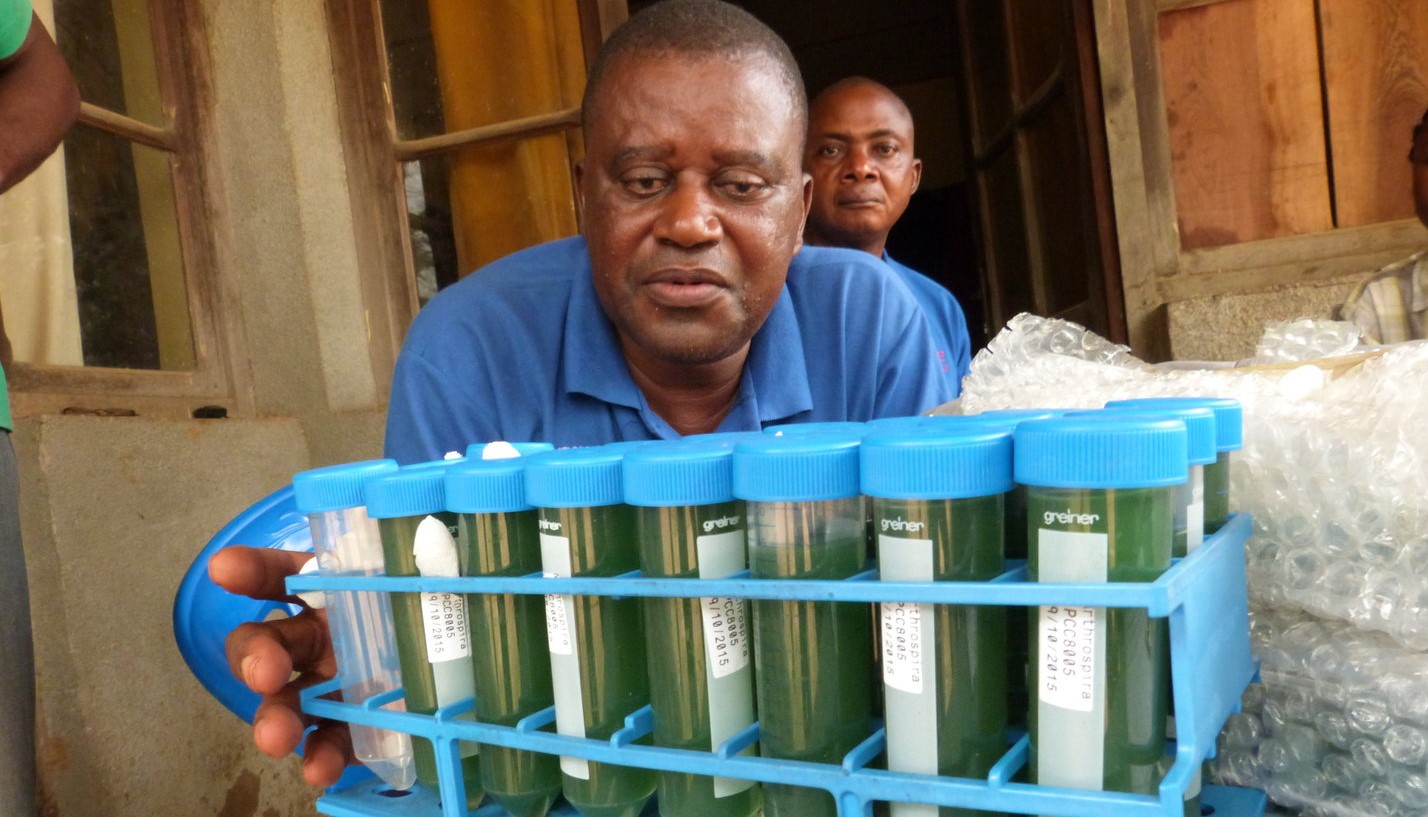
Introduction of Spirulina in Equatorial Africa To Improve Local Nutrition
The “Introduction of Spirulina in Equatorial Africa To Improve Local Nutrition” (Inspiration) project is aiming to develop and support the cultivation of the cyanobacteria Spirulina in African communities. For over a decade the Belgian Nuclear Research Centre (SCK·CEN) has been a partner in the ESA’s Micro-Ecological Life Support System Alternative (MELiSSA) project, researching various aspects of the Spirulina bacteria. Through the “Inspiration” project, the SCK·CEN aims to apply the new knowledge in the Democratic Republic of the Congo, territory of Bikoro, where the powdered algae is used to supplement the local diet.
What is Spirulina?
The Arthrospira bacteria – better known as blue-green algae Spirulina – is a photosynthetic cyanobacteria with a distinctive spiral morphology that has been investigated by MELiSSA scientists for the past 25 years . Research has shown that Spirulina is high in proteins, vitamins and essential minerals, and can be eaten as a delicious protein-rich meal supplement. It was ESA astronaut Samantha Cristoforetti who ate the first food containing algae on board the space station during the Futura Mission (2014/15). Here on Earth, Spirulina demonstrates its potential to make a contribution in areas with low food security and insufficient dietary intake.
Improving food security and nutrition on Earth
According to the World Food Programme, Congo faces a triple burden of malnutrition among children under 5 years of age. Only 6 percent of children under 2 years of age have a diet that meets the minimum dietary diversity requirements. The traditional regional source of nutrition, a root vegetable cassava (also called manioc) supplies insufficient amounts of protein and the local population is in risk of malnourishement.
In collaboration with Entrepreneurs pour entrepreneurs, a non-profit organisation that promotes economic partnerships in developing countries through local entrepreneurship, SCK·CEN researchers have decided to use their expertise in a humanitarian effort. The pilot project was launched in 2016 in the village of Mooto where the first Spirulina growing ponds were built. As seen on the photo below, Spirulina is grown in tubs of water by adding just a few common ingredients. It is then dried and powdered, with 10 grams sprinkled on food each day being enough to satisfy most dietary requirements – adding a slightly saltier taste to a dish.

Given Spirulina’s nutritional qualities, only a small amount is needed to supplement the diet with much-needed protein, vitamin A and iron. This truly inspirational project helps to combat the chronic children’s malnutrition and has a positive impact on food security in the local community. By doing so, it also contributes to the UN 2030 agenda, namely to SDG2 Zero Hunger and SDG3 Good Health and Well-being.
And back to space …
As research shows, the Arthrospira bacteria are highly resistant to radiation found in outer space and hence are a well-researched organism to use as a potential source of nutrition for astronauts on long-term missions. During future missions far from Earth, astronauts will need to grow and harvest their food. For its unique properties, Spirulina is believed to be a key player in a closed-loop system which could help facilitate deep-space travel by reducing or even eliminating the requirement for fresh supplies of oxygen, food and water from Earth. As the ESA’s head of the MELiSSA project summarised:
“When we started working on MELiSSA over 25 years ago we were inspired by ecosystems such as found around lake Chad 1500 km to the north of Bikoro. It is fitting that our work creating a circular ecosystem is now helping the local population as well as future astronauts in space.”